Greed Made Me Small
The tea had made that brown ring again inside the cup, the kind of ring that looks less like tea and more like a small municipal waterbody after three committees, two councillors, and one failed beautification scheme have finished with it.
I was sitting in my room in the southern fringe of Calcutta, knees too close to chest, not because I had discovered yoga, not because I had become spiritual, and certainly not because some imported monk with a beard like a retired goat had taught me the secret of inner peace. I was sitting like that because a man shrinks in stages.
First his plans shrink.
Then his posture.
Then the space he permits himself to occupy in a room.
You think collapse is dramatic. It is not. Collapse is often very domestic. It happens under a ceiling fan that clicks once every six rotations, beside a plastic bottle of water, near a phone you do not want to answer, while the tea cools into a medical sample.
I have known many selfish people.
That sounds like an ordinary complaint. Everybody says it. The fish seller says it. The Uber driver says it. The uncle with three flats and one ruined son says it. The lady in the pharmacy says it while charging you twelve rupees extra because “change nei.” But selfishness is not one bad habit, like chewing loudly or forwarding patriotic nonsense before breakfast.
Selfishness is an ecosystem.
It has weather. It has breeding seasons. It has camouflage. It has courtship dances. It has nice shirts and polite English and “How are you, my friend?” spoken in the tone of a man checking whether your liver is still reusable.
Greed is not only the fat fellow in a gold chain counting money. That fellow exists, of course. In India he exists in bulk, usually sweating near an air conditioner and calling everyone “boss.” But greed has learned manners now. Greed has done a communication workshop. Greed has a LinkedIn profile. Greed says “collaboration” when it means free labor. Greed says “family” when it means unpaid obligation. Greed says “opportunity” when it means you bring the ladder and it will climb.
The polite friend remembers you when your skill can be milked. The relative remembers you when something must be arranged, repaired, written, explained, or paid for. The client praises your brain the way a fisherman praises bait. The acquaintance asks, “How are you?” and before you can answer, he is already searching your sorrow for spare parts.
This is what made me tired.
Not one betrayal. One betrayal is almost respectable. It has shape. It has a face. You can put it in a chair and cross-examine it.
But small selfishness is different. It comes like mosquitoes.
One bite is nothing. Two bites are irritation. Fifty bites and suddenly you are standing in the middle of your own life, scratching everywhere, ashamed that such tiny creatures have defeated you.
And then there is superficiality, that cheap perfume sprayed over moral rot.
A selfish goat is still a goat. It eats the hibiscus and moves on. It does not hold a seminar on community gardening. But the superficial selfish person wants the hibiscus, the fence, the gardener’s lunch, the gardener’s daughter’s school marks, and afterward a photograph with folded hands saying, “We must care for the environment.”
These people do not merely take.
They want applause for taking.
They throw garbage into the pond and inaugurate a cleanliness drive beside it. They underpay you and praise your talent. They insult your intelligence and then invite you to “stay positive.” They chew through your patience like termites through old furniture and then complain that the chair has become weak.
For years I thought I had been unlucky in people.
Now I suspect I had simply been alive.
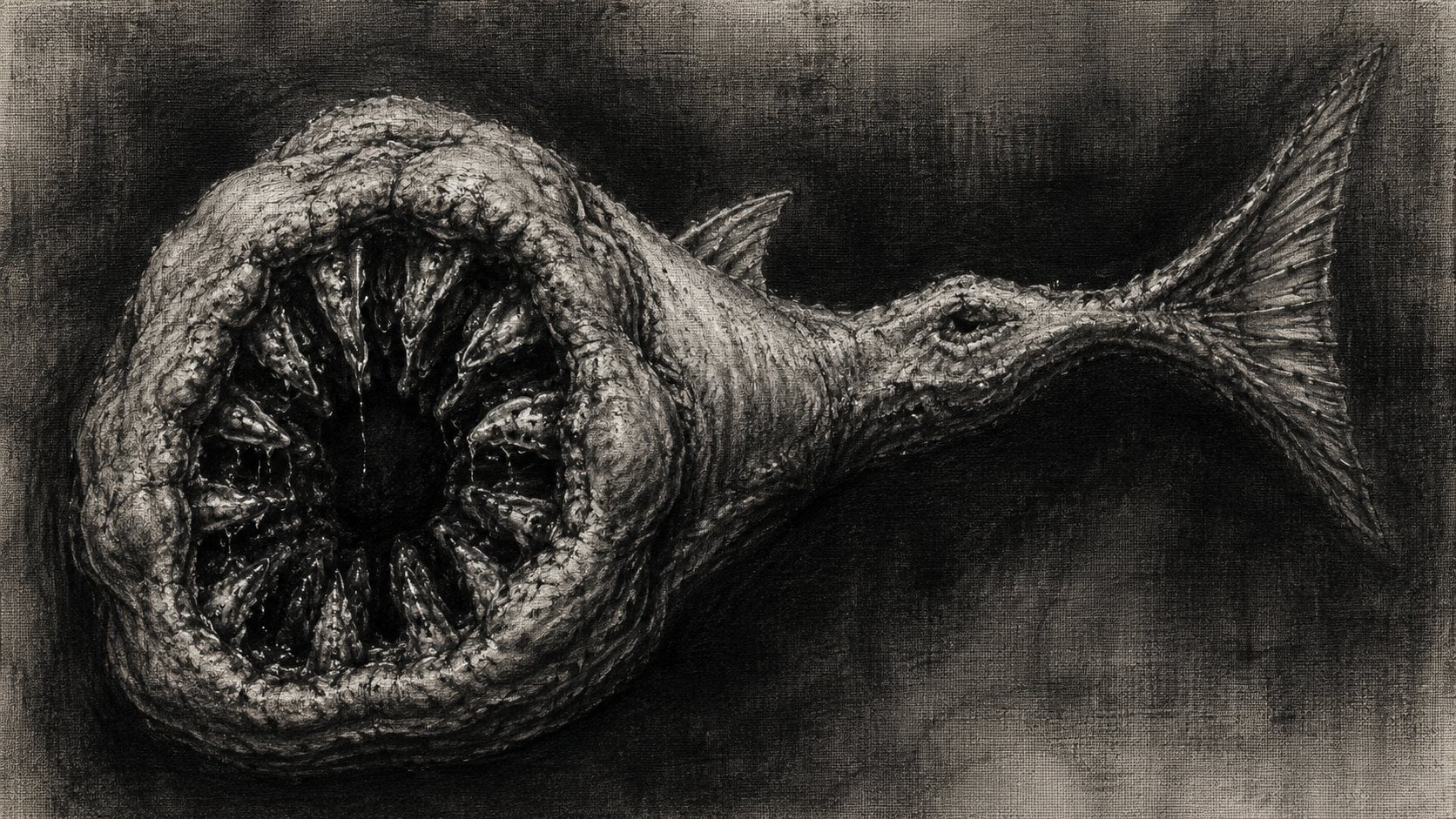
Nature, if we are honest, is not a school prize-giving ceremony. It is a crowded bazaar where everyone is eating someone, cheating someone, copying someone, or pretending to be a leaf. The cuckoo lays eggs in another bird’s nest. Some flowers fool insects with false promises. The anglerfish hangs a little light in the dark, and some poor fool swims toward hope and becomes lunch.
Fine. Biology is like that. Appetite wearing a costume.
But even a tapeworm does not invite you for tea and tell you it believes in transparency.
Humans do.
That was my mistake. I expected people to remain ordinary mammals. Hairy, frightened, needy, occasionally kind, often foolish, but warm enough in winter. Instead I met too many polished mannequins with teeth. Too many appetite machines sprayed with deodorant. Too many laminated souls, smooth on the outside and hollow inside, like those plastic sweet boxes that look grand until you lift them and discover six pieces of sandesh arranged with the confidence of a bank fraud.
So my own animal went backward into its burrow.
No speech. No manifesto. No grand renunciation. No saffron robe. No mountain cave. Nothing photogenic.
Just fewer calls answered.
Smaller shopping lists.
Less visiting.
Less explaining.
Less hope.
A man does not always withdraw because he has become wise. Sometimes he withdraws because his nervous system has become a tired clerk in a government office, stamping one file after another and muttering, “No more applications today.”
Fear is also not poetic.
Fear is not violin music in rain. Fear is the mouth tasting slightly metallic when the phone rings. Fear is the body stiffening at a WhatsApp notification. Fear is the chest becoming a locked storeroom full of old exam papers, dead mosquitoes, and bills you have not yet opened. Fear is your face arranging itself into neutrality before meeting another human being, like a shopkeeper lowering shutters before a procession turns violent.
I have become very good at neutrality.
In India the face is a border checkpoint. Smile too much and people think you are available for exploitation. Frown too much and they think you are arrogant, mad, dangerous, or worst of all, unsuccessful but still not obedient. Speak the truth and people look at you as if you have spat into the luchi dough. Speak softly and they climb onto your head. Remain silent and they manufacture a cheaper version of you and distribute it in small poisonous packets.
So I sit inside.
Inside the room.
Inside the skull.
Inside the old shame.
Inside the nervous system’s shabby railway waiting room, where every train is delayed and the tea stall fellow has been dead since 2009 but still somehow charges full price.
Outside, everyone is performing surface.
Phones. Cars. Shirts. Family photos. Temple visits. Business confidence. Political certainty. Fake calm. Fake success. Fake “I am blessed.” That special Indian expression of a man who has read half a motivational quote and now believes he is Marcus Aurelius with acidity.
I do not feel superior to them. Superiority requires vitamins, money, and better posture.
I feel more like a laboratory rat that has finally learned which lever gives food and which lever gives electric shock, except the experimenters have misplaced the food lever and electrified the entire cage.
People call this cynicism.
Nice word.
Clean word.
It sounds like a minor defect in a philosophy seminar, something a professor can discuss while adjusting his spectacles.
But mistrust is not born as an opinion. It is scar tissue. It is skin remembering the stove. It is the immune system after infection. It is the body saying, “I have seen this shape before, and last time it came smiling with a knife hidden inside a fruit basket.”
The first time someone uses you, you are hurt.
The fifth time, you are disappointed.
The fiftieth time, your ribs open a tiny passport office, and every new person must apply in triplicate before being allowed near the soft areas.
Most fail.
Some arrive with compliments, the cheapest counterfeit currency on earth. Some arrive with need, which is often greed wearing a wet towel. Some arrive with friendliness, that suspicious neighborhood dog of emotions, wagging at the front and biting at the back. Some arrive with large words: culture, duty, family, nation, business, professionalism, spirituality, opportunity. Large sacks, all of them. Useful for carrying small theft.
It is tiring, being afraid of people.
Not dramatic afraid. Not cinema afraid. More like drain-water afraid. Low, steady, stinking, always under the street. You step out and it is there beneath the slab. You talk and it bubbles. Some old betrayal from 1997 sends up a small burp. Then another from 2008. Then one from 2014. Then last Tuesday joins the procession, because memory has no shame and excellent attendance.
A man can survive one tiger.
But mosquitoes win.
Petty selfishness is the mosquito of the soul. It does not roar. It does not announce itself. It takes tiny red mouthfuls and leaves you irritable, ugly, and embarrassed by your own scratching.
Then comes the real comedy.
After enough withdrawal, you become unattractive to the very species you fear.
Fear makes you stiff. Solitude makes your speech either too deep or too rusty. Depression removes charm like a municipal worker removing illegal posters, slowly, badly, leaving glue behind. Poverty removes glamour. Honesty removes networking. Middle age removes margin. Anxiety removes timing. By the end, you become the man at the edge of the room, too educated for empty talk, too broke for respect, too depressed for romance, too skeptical for business, too hungry for affection, and too tired to pretend that everything is fine.
This is not tragedy.
It is farce with blood pressure.
The Greeks had masks for comedy and tragedy. Bengalis have plastic chairs. Sit in one on a hot afternoon, vest sticking to your back, fan rotating overhead like an underpaid philosopher, and the whole civilization reveals itself.
Family becomes audit.
Friendship becomes procurement.
Love becomes installment plan.
Business becomes ambush.
Spirituality becomes scented fog.
Politics becomes a loudspeaker with digestive trouble.
And man, poor man, becomes a clever intestine pretending to have principles.
Of course there are good people. Let us not become foolish. I am not going to deny oxygen because I live near a drain. Goodness exists. It appears now and then like a shy bird between two buildings. You see it for one second and think, ah, there, still alive.
But greed does not arrive like a shy bird.
Greed arrives honking.
Greed double-parks.
Greed chews gutkha.
Greed asks for discount.
Greed calls itself realistic.
This is why I have shrunk.
I dislike the word, but it is exact. Shrunk like wool washed wrong. Shrunk like a man entering cold water. Shrunk like ambition after rent, medicine, electricity bill, and one unpaid consulting invoice have sat together and held a small conference on your future.
I was not born timid. I became costly to myself.
Every greedy, glossy, selfish person left a little invoice inside me. Now I wake up already overdrawn.
The body knows first. The mind comes later with its pompous report, stamped and stapled.
The shoulders fold in. The voice lowers. The eyes avoid. The appetite becomes suspicious of itself. Even desire, that last illiterate village idiot inside a man, peeps out from under the cot, sees the human marketplace, and goes back muttering, “No thank you. Too noisy. Too expensive. Too many forms.”
This morning the tea cooled again.
A fly landed on the rim of the cup and rubbed its legs together like a tiny businessman before a meeting. I watched it with unreasonable respect. It tasted the brown ring and flew away, probably disappointed that there was nothing left to take.
I pulled my knees closer.
The fan clicked overhead.
Outside, Calcutta continued with its horns, drains, tea stalls, unpaid promises, political posters, and brave little people pretending not to be afraid.
For three seconds I felt almost calm.
Not healed.
Not saved.
Just calm.
In this city, that is already a small revolution.